

No hairstyle has been shown to prevent head lice, and tight braids, buns and ponytails are not part of the prevention advice from the CDC or the AAP. Head lice mainly spread by direct contact with the hair of a person who has them, and two heads can touch whether the hair is loose, braided or pinned up. A neat style can still be a sensible choice for comfort. It just can’t stand in for the habits that actually lower the chances.
That distinction matters, because a braid can feel like protection when it isn’t. A family that trusts the style may put off the regular head checks that catch lice early, and the CDC notes that people with head lice may not have symptoms, particularly with a first infestation or when an infestation is light. Below, we look at how lice actually travel between heads, what the guidance says about braids, gel and hair ties, and how to check styled hair with confidence.
How Do Head Lice Get From One Head to Another?
Head lice crawl from one person’s hair to another’s during close contact, and they cannot hop or fly. The CDC’s overview of head lice says the most common way to get them is head-to-head contact with a person who already has head lice. The AAP’s guide for parents describes the main route as close, prolonged head-to-head contact. Picture two kids bent over the same tablet, curled up together on a couch for a movie, or pressed cheek to cheek for a photo.
That picture explains why a hairstyle can’t carry the whole load. When two heads touch, the hair right at the scalp touches too, and that hair is there no matter how the length is arranged. A braid gathers the long strands into one place, but it doesn’t keep a hairline, a part or the nape of the neck from meeting another child’s head during a hug or a team huddle.
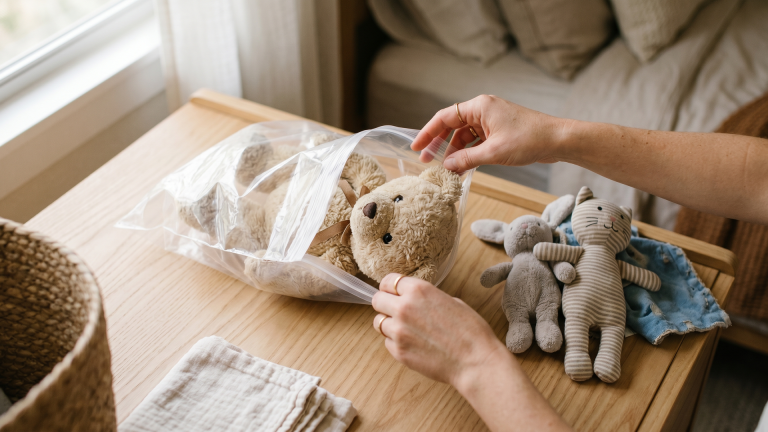
Other routes exist, and the CDC describes them as less common. They include wearing hats, scarves, coats, sports uniforms or hair ribbons worn by someone with lice, using that person’s combs, brushes or towels, and lying on a bed, couch, pillow, carpet or stuffed animal that has recently been in contact with them. Lice don’t hold out long away from a person, either: the CDC says they will die within two days if they fall off a person and cannot feed.
Pets aren’t part of the picture at all, because the CDC says animals do not get or spread head lice. If you’re unsure whether the bug you found is even a louse, our guide to telling lice from fleas and bed bugs in hair walks through the differences.
Can You Get Lice With Braids, Buns or Your Hair Worn Up?
Yes, people with braids, buns, ponytails and updos can get head lice, because every one of those styles still has a scalp underneath it. The AAP says lice lay and attach their eggs to hair close to the scalp, and the CDC advises looking for nits attached firmly within a quarter inch of the base of the hair shafts. Those are exactly the inches a braid leaves where they are.
Braids that stay in for weeks don’t change the math. The CDC says adult lice can live on a person’s head for about 30 days, and a long-wear style is still hair on a warm, living scalp the entire time. What a long-wear style can change is how easy it is to look closely, which is why checking braided hair gets its own section below.
Hair texture comes up too, especially from parents of kids with braids. The CDC notes that lice may have claws that are better adapted for grasping the shape and width of some types of hair, but not others. That is a long way from immunity, and the AAP puts it simply: anyone can get head lice. If your child wears coily hair in braids, twists or locs, read why a normal scalp check misses lice on coily hair before your next look.
So does wearing hair up prevent lice? It doesn’t block the route that matters. The CDC’s advice is to avoid head-to-head (hair-to-hair) contact during play and other activities, and an updo doesn’t keep heads apart. A high ponytail can still swing into a friend’s hair, and a bun on top leaves the sides and back of the head right where they were.
Is There a Best Hairstyle to Prevent Lice?
No hairstyle earns the title of best for lice prevention, because none has been shown to keep lice away, whether it’s described as protective, anti-lice or anything else. The advice to tie hair back rests on a reasonable-sounding guess: fewer loose strands might mean fewer chances for hair to brush against another child’s hair. Neither the CDC nor the AAP turns that guess into a recommendation, and it does nothing about heads touching at the scalp.
So pick a style for reasons that hold up. A style that keeps your child comfortable, stays out of their eyes during sports and is easy for you to take down for a check is a sensible choice. A style that has them fiddling with it all day, borrowing ties from friends or trading clips at a sleepover deserves a second thought, since sharing hair items is something the guidance does address.
It also helps to separate a style from a haircut. Some families think about cutting hair short when lice are on their mind, yet hair length isn’t part of the CDC or AAP prevention advice either. Our post on whether cutting your hair gets rid of head lice covers what a haircut can and can’t change.
Does Hair Gel, Spray or Anything Else in Hair Keep Lice Away?
No gel, spray, oil or other hair product is recommended for keeping lice away by the CDC, the AAP or MedlinePlus, so there’s no sourced reason to rely on one. Their prevention guidance centers on contact and on keeping personal items personal. Hair ties marketed as lice repellents land in the same place: the guidance doesn’t recommend them, and what it does say about hair ties is not to share them.
Home remedies get the same honest answer. The AAP advises against home remedies such as petroleum jelly, mayonnaise, tub margarine, essential oils or olive oil, because no studies prove they work. MedlinePlus adds that there is no clear scientific evidence that lice can be suffocated by home remedies. Both points are about treating lice rather than preventing them, but they’re worth knowing before coating a child’s hair in a kitchen ingredient as a shield.
Styling products can also make a head check more confusing. In the CDC’s words, “Nits are often confused with other particles found in hair such as dandruff, hair spray droplets, and dirt particles.” The AAP gives the test that settles it: nits are firmly attached to the hair, while dandruff, dirt and other particles are not. Our post explaining why a speck that slides down the hair isn’t a nit shows what that difference looks like in practice.
If a lice medicine does become part of the plan, hair products matter in a different way. The CDC says not to use a combination shampoo and conditioner, or conditioner, before using lice medicine, and to use the medicine as directed on the box or label.
What Actually Lowers the Chance of Lice?
Avoiding head-to-head contact, keeping hair items personal and checking hair regularly are the habits that lower the chance of lice. They come straight from the CDC, the AAP and MedlinePlus, and they apply to every hair type, length and style. The table pairs everyday situations with what the guidance says about each one.
| Situation | What the guidance says | Source |
|---|---|---|
| Heads close together during play, sports, sleepovers or camp | Avoid head-to-head (hair-to-hair) contact | CDC |
| Hair ties, hair ribbons and barrettes | Don’t share them | CDC, MedlinePlus |
| Combs, brushes and towels | Don’t share them | CDC |
| Hats, scarves, helmets and headphones | Teach children not to share items they put on their head | CDC, MedlinePlus |
| Beds, couches, pillows and stuffed animals recently in contact with someone who has lice | Don’t lie on them | CDC |
| Swimming pools | Head lice are unlikely to spread in a swimming pool | CDC |
| Regular head checks | A good way to spot head lice before they have time to multiply | AAP |
Contact is the habit worth talking through with kids, and it lands better when it’s concrete. Instead of a vague “keep your head to yourself,” name the moments that bring heads together: sharing one screen, group selfies, rows of sleeping bags at a sleepover and team huddles. The CDC lists sports activities, playgrounds, slumber parties and camp among the places to avoid head-to-head contact, and our guide on how to prevent lice at summer camp applies the same thinking to a week away from home.
Sharing is the quieter route. MedlinePlus advises teaching children not to share clothing and other items they put on their head, such as headphones, hair ties and helmets. One practical fix is a small pouch of your child’s own ties and clips in their bag, so there’s no reason to borrow when a style comes loose.
There’s also a short list of things you can skip. The CDC says getting head lice is not related to the cleanliness of you or your environment, so extra hair washing isn’t a prevention step. It also says fumigant sprays and fogs are not necessary to control head lice and can be toxic if inhaled or absorbed through the skin, and the AAP advises against spraying pesticides in your home. For the fuller picture once a case is confirmed, see how to treat and prevent head lice.
How Do You Check Braided or Tied-Back Hair for Lice?
Check styled hair the way the AAP describes for any hair: in bright light, one section at a time, down to the scalp. Regular checks matter because lice can be there before anyone feels them; the CDC says it may take four to six weeks for itching to appear the first time a person has head lice.
- Seat your child in a brightly lit room and part their hair. MedlinePlus advises parting the hair all the way down to the scalp in very small sections; with braids or twists, follow each existing part line down to the skin.
- Start with the hairline at the back of the neck and behind the ears, which the AAP calls the easiest place to find lice.
- Look for crawling lice. They avoid light and move quickly, so a fine-tooth louse or nit comb can help, and the CDC adds that a magnifying lens may help you find crawling lice or nits.
- Look for nits close to the scalp. The CDC says nits attached more than a quarter inch from the base of the hair shaft are almost always hatched or dead, so the closer look belongs right against the scalp.
- For a comb-out, the AAP describes wetting the hair, combing small sections with a fine-tooth comb, wiping the comb on a wet paper towel after each pass and examining the scalp, comb and towel, then repeating until all the hair is combed.
Some nits blend in with some people’s hair color, the AAP notes, which can make them hard to see. Our guide to spotting lice and nits in brown hair covers what to look for when color works against you.
What you find decides the next step. The CDC says finding a live nymph or adult louse on the scalp or hair is the best way to diagnose a head lice infestation, and that if you’re not sure whether a person has head lice, you should see your healthcare provider. If you do find live lice, the AAP advises checking with your child’s doctor before beginning any treatment, and the CDC recommends checking all household members and other close contacts.
Frequently Asked Questions
Do braids help prevent lice?
Braids don’t prevent lice, even though they can be a tidy, comfortable style for a child who likes them. Lice cross over when heads meet, and braided hair still grows from a scalp that can touch another head. Treat the braid as a style choice, then lean on the habits health agencies actually recommend, starting with keeping heads apart during play and keeping hair ties personal.
Does tying wet hair cause lice?
No. Tying up wet hair can’t create lice, because head lice are insects that pass from a person who already has them. The AAP says it doesn’t matter whether hair is clean or dirty. A child with lice picked them up through contact with another person’s hair or, more rarely, through a shared item.
Do lice repellent hair ties work?
No hair tie has been shown to repel lice, and none is recommended by the CDC, the AAP or MedlinePlus. The guidance does say something useful about ties, though: each child should use their own. A tie that never passes between friends removes one sharing route, whatever it’s made of, while a tie of any kind can’t stop two heads from touching.
Do kids with short hair get lice?
Yes, kids with short hair can get lice, since short hair still sits on a scalp and contact is what moves lice. The CDC notes that some studies suggest girls get head lice more often than boys, probably due to more frequent head-to-head contact. That points to how kids play together rather than how their hair is cut, so the same habits apply to every child.
Can lice jump from loose hair onto my child?
Lice can’t jump from loose hair or anywhere else; the AAP describes them as crawling insects that cannot jump, hop or fly. They move by crawling from one person’s hair to another’s. Hair that brushes a friend’s hair during a hug still counts as contact, though, so whether your child’s hair is loose or tied, the habit to teach is the same: keep heads apart.
Should hair ties, headbands and brushes be cleaned after a case?
Yes, the CDC advises cleaning items used during the two days before treatment. It suggests washing clothing, towels, bed linens and similar items in hot water (130 degrees Fahrenheit) and drying them on high heat, or sealing what can’t be washed in a plastic bag for two weeks. Combs and brushes can soak in hot water of at least 130 degrees Fahrenheit for 5 to 10 minutes. The AAP adds that you don’t need to throw these items away.
Find a Lice Lifters Clinic for a Closer Look
When you’ve checked and still aren’t sure what you’re seeing, or you’ve found lice and want hands-on help, our clinics can take it from there. Lice Lifters clinics provide professional head checks and lice removal with a non-toxic, enzyme-based in-clinic treatment that is safe for children and all ages and is completed in one visit. Our treatment is backed by a 30 Day Guarantee, which applies when the whole family is checked. To get started, find a Lice Lifters clinic near you and choose the location closest to home.