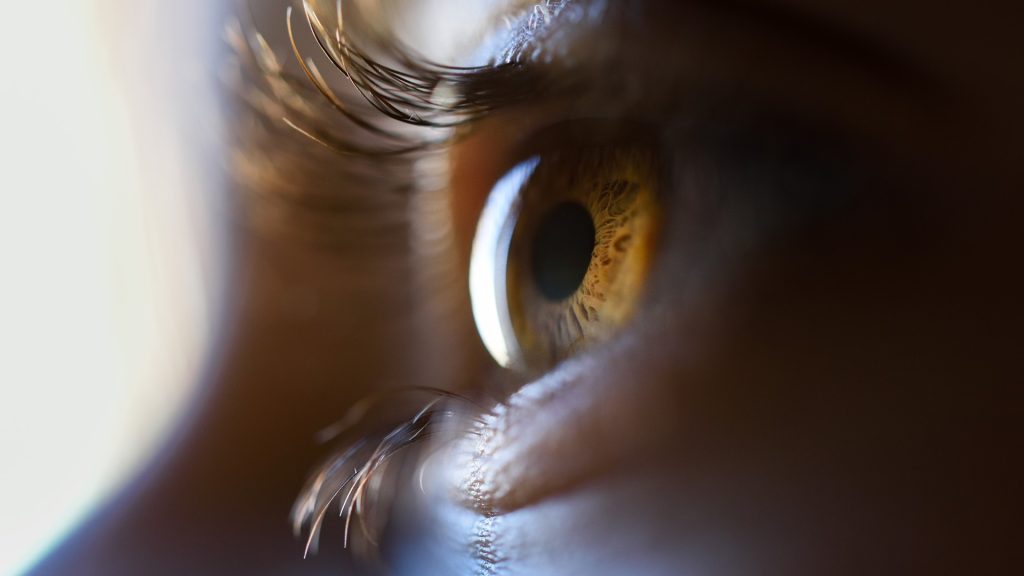
Yes, head lice can be found on eyelashes. The CDC says head lice turn up mostly on the head, but also on the eyebrows and eyelashes, and MedlinePlus says the same. So lash lice are real, and a firmly stuck speck on a lash could be a nit, the egg lice glue to hair. Because the head is still where lice are mostly found, the next steps are to keep lice medicine away from the eyes, call your child’s doctor and check every head in the house.
If you have read that lice cannot survive on lashes, that claim does not match what these health agencies say. It is also not a reason for alarm. According to the CDC, head lice do not transmit any disease, and getting them is not related to how clean a person or a home is. What matters is handling the eye area with care and finding every louse on the head.
What Do Lice and Nits on Eyelashes Look Like?
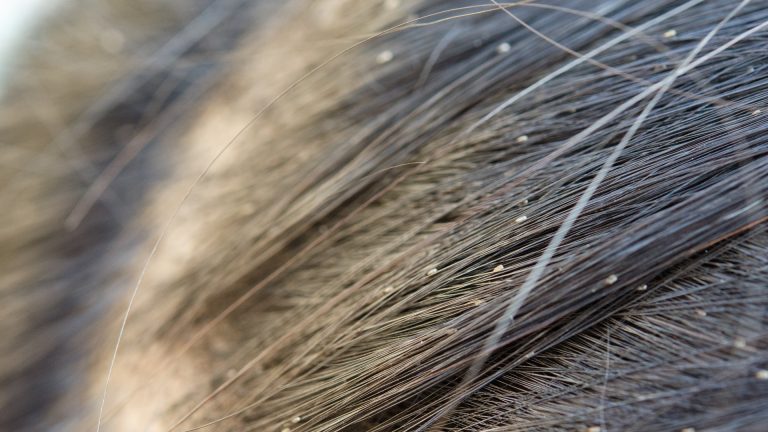
Look for the same features the health agencies describe in hair: tiny oval eggs fixed to individual hairs, and small insects that crawl. The AAP describes nits as oval, about the size of a knot in thread (0.8 mm long and 0.3 mm wide), and yellow to white. A sticky substance holds each one firmly in place, and once the egg hatches, the empty nit stays on the hair shaft.
Adult head lice are roughly 2 to 3 mm long, about the size of a sesame seed, according to the CDC. The AAP says their bodies are pale and gray, though the color can vary, and that a nymph (a baby louse) looks like an adult but is closer to the size of a pinhead. Lice move by crawling and cannot hop or fly. Because adults and nymphs are small, move quickly and avoid light, the CDC notes they may be difficult to find, and a magnifying lens may help.
| What you see | Size | What sets it apart |
|---|---|---|
| Nit (egg) | About 0.8 mm long and 0.3 mm wide, the size of a knot in thread | Oval, yellow to white, and firmly attached to the hair |
| Nymph (baby louse) | About the size of a pinhead (1.5 mm) | Looks like an adult louse but much smaller |
| Adult louse | Roughly 2 to 3 mm, about the size of a sesame seed | Pale and gray body that may vary in color; moves quickly and avoids light |
| Dandruff, dirt or hair spray droplets | Can be mistaken for nits | Not firmly attached to the hair |
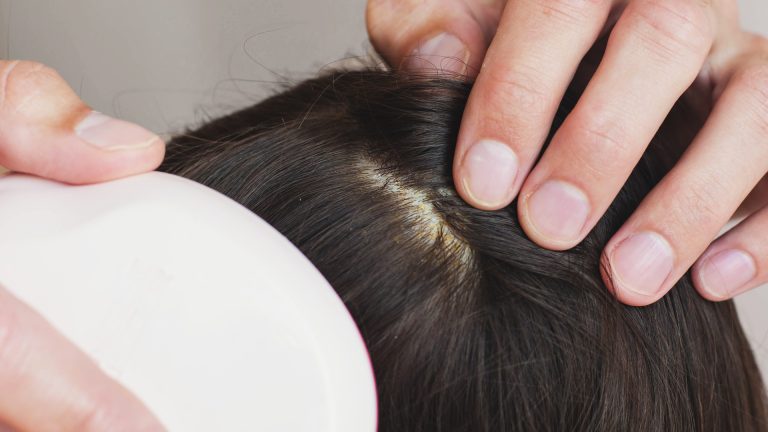
The look-alikes are the hard part. The CDC and the AAP both say nits get confused with dandruff, dirt particles and hair spray droplets, and the CDC states plainly that misdiagnosis of head lice infestation is common. The AAP’s test is attachment: nits are firmly attached to hair, while dandruff, dirt and other particles are not. A speck that slides or lifts away with no resistance does not fit that description. When you still cannot tell, the CDC’s advice is to see your healthcare provider.
How Do Lice Get Onto the Eyelashes?
Lice reach a family through close contact, not through dirt or bad luck. The CDC names head-to-head contact with a person who already has head lice as the most common way to get them, and the AAP describes the main route as close, prolonged head-to-head contact. MedlinePlus notes that children ages 3 to 11 and their families get head lice most often, because, in its words, “young children often have head-to-head contact while playing together.”
Shared belongings are a smaller risk. The CDC lists less common routes such as wearing hats, scarves, coats or hair ribbons an infested person wore, using their combs, brushes or towels, or lying on a bed, couch, pillow or stuffed animal they recently used. The AAP calls the chance of spread through combs, brushes, hats and sports helmets very small. If you are weighing those risks at home, our guides on how long head lice can live on a hairbrush and how long head lice can live on clothes cover them in detail.
Lice do not last long away from a person, either. The AAP says they cannot survive more than one day without a blood meal, and the CDC says they die within two days if they fall off and cannot feed. Pets play no role: the CDC states that animals do not get or spread head lice. MedlinePlus adds that personal hygiene and cleanliness have nothing to do with getting head lice, so finding them on a child’s lashes says nothing about how well that child is cared for.
What If an Eyelash Lice Case Seems Bad?
A case that looks bad is upsetting, but the health agencies are reassuring on the biggest question. The CDC says head lice do not transmit any disease and are not considered a health hazard, and the AAP says that although lice may be a nuisance, they do not cause serious illness. In a heavy case, the concerns that remain are discomfort and what scratching can do to the skin.
Itching is the most common symptom of head lice infestation, according to the CDC, and the AAP notes that it happens on the areas where lice are present. The CDC also lists a tickling feeling or a sensation of something moving in the hair, plus irritability and sleeplessness. MedlinePlus explains the lost sleep: head lice are most active in the dark. The itch comes from an allergic reaction to louse bites, and the CDC says it may take four to six weeks to appear the first time a person has lice. Some people, particularly with a first or light infestation, have no symptoms at all.
Scratching is where a case can become more than a nuisance. The CDC warns that sores caused by scratching can sometimes become infected with bacteria normally found on the skin. If you have any questions about sores or anything near the eyes, the AAP says to ask your child’s doctor. Keep in mind, too, that the AAP says itching from head lice can last for weeks even after the lice are gone, so an itch that lingers does not by itself prove lice are still there.
How Do You Get Rid of Eyelash Lice Safely?
Start with your child’s doctor rather than a bottle of lice medicine. Head lice medicines are applied to the hair, and the CDC’s clinical guidance on head lice medications says to keep them out of your eyes and, if they get in, to flush them immediately. The CDC also cautions that the drugs used to treat lice are insecticides and can be dangerous if misused or overused. The lash line is the last place to experiment.
The AAP’s guidance for parents points the same way. Check with your child’s doctor before beginning any head lice treatment, and use head lice medicine only when it is certain your child has living head lice. As the AAP puts it, your pediatrician can help you choose an appropriate treatment option for your child, so bring the lashes into that conversation and let the doctor see exactly what you found. The AAP also warns against home remedies for head lice, such as mayonnaise, tub margarine, essential oils or olive oil, because no studies prove they work.
A few cautions from the CDC, the AAP and MedlinePlus apply whenever lice medicine is in the house:
- Follow the directions on the package exactly as written (AAP).
- Use only one product at a time unless your health care provider tells you otherwise (MedlinePlus).
- Do not use extra amounts of any lice medication unless your physician and pharmacist say to (CDC).
- Have an adult apply the medicine, never the child, and do not leave a child alone with medicine in their hair (AAP).
- Never place a plastic bag on a child’s head, and never use gasoline, kerosene or medicines made for animals (AAP).
- Skip fumigant sprays and fogs at home; the CDC says they are not necessary and can be toxic if inhaled or absorbed through the skin.
Why the Head and the Whole Household Need Checking
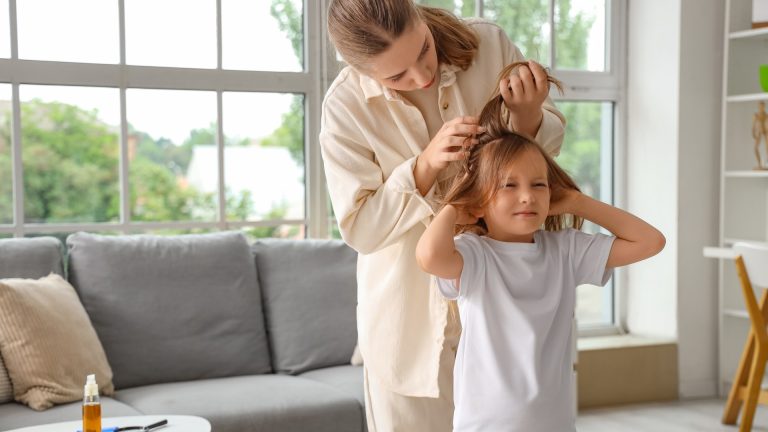
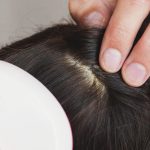
Lice on the lashes are a signal to check the head, since the CDC says that is where head lice are mostly found. The AAP names the easiest places to look: the hairline at the back of the neck and behind the ears. If you do not see crawling lice, the CDC says to look for nits attached firmly within one-quarter inch of the base of the hair shafts, and it calls finding a live nymph or adult louse on the scalp or hair the best way to diagnose an infestation.
The AAP describes a comb-out method that parents can use to check:
- Seat your child in a brightly lit room and wet their hair.
- Comb through the hair in small sections with a fine-tooth louse or nit comb.
- After each comb-through, wipe the comb on a wet paper towel and examine the scalp, comb and towel carefully.
- Repeat until you have combed through all of your child’s hair.
The AAP notes that this method helps you check but “usually doesn’t work on its own to get rid of head lice.”
Everyone close to the child needs a look as well. The CDC says to check all household members and other close contacts, and to treat all infested persons, along with people they share a bed with, at the same time. For the head itself, the CDC says both over-the-counter and prescription medications treat head lice, and the AAP calls head lice medicine the most effective way to treat them while asking parents to check with the child’s doctor first. After each treatment, the CDC recommends checking hair and removing nits and lice every 2 to 3 days for the next 2 to 3 weeks. Our guide on how to treat and prevent head lice goes through those steps.
That follow-up window matches the life cycle. The CDC says nits take about a week to hatch, adult lice can live on a person’s head for about 30 days, and an adult female can lay about six eggs each day. The AAP adds that the cycle can repeat every 3 weeks if lice are left untreated, which is why one check is not the end of it.
The house needs less work than you might expect. The CDC recommends machine washing and drying clothing, towels, bed linens and other items the infested person wore or used during the two days before treatment, with the hot water (130 degrees Fahrenheit) cycle and high heat drying. Items that cannot be washed can be sealed in a plastic bag for two weeks, and combs and brushes can soak in hot water of at least 130 degrees Fahrenheit for 5 to 10 minutes. Beyond that, the CDC says spending much time and money on housecleaning is not necessary to avoid reinfestation.
Frequently Asked Questions
Is eyelash lice a real thing?
Yes, eyelash lice are real. Health agencies including the CDC and MedlinePlus list the eyelashes and eyebrows among the spots where head lice can turn up, in addition to the head itself. A speck or a moving insect at the lash line deserves a careful look, and since look-alikes are easy to mistake for nits, your child’s doctor can confirm what is there.
What does lash lice look like?
Lash lice look like tiny pale or gray insects, and their eggs look like small white or yellow-brown specks stuck tight to individual hairs. The AAP uses that specks description for nits found in hair, and the same features help at the lashes. Live lice avoid light and move quickly, so a quick glance can miss them.
Can you get nits in your eyelashes?
Possibly: nits are lice eggs glued to hair, and since head lice can be found on the lashes, a firmly attached speck there could be one. On the head, the CDC says “you will often see nits on hair behind the ears and near the back of the neck,” so check there too. Show any stuck specks on the lashes to your child’s doctor to confirm what they are.
Can lice get in your eyes?
Head lice cling to hair, so around the eye, the places health agencies name are the eyelashes and eyebrows. The AAP describes head lice as crawling insects that feed on small amounts of blood from the scalp. If you have any questions about the area around the eyes, the AAP says to ask your child’s doctor. If lice medicine gets into an eye, the CDC says to flush it immediately.
How do you get rid of eyelash lice?
Getting rid of eyelash lice starts with a call to your child’s doctor rather than a home product near the eye. The AAP says it is best to call your pediatrician before treatment when your child has head lice. At the same time, comb-check the head and every close contact, because the lashes are not the only place lice settle.
Does everyone have eyelash lice?
No, eyelash lice are head lice that a person picks up from someone who already has them, not something everyone carries. The CDC names head-to-head contact as the most common way that happens. Anyone can get head lice, the AAP notes, even though they are most common in young children, so adults in a home with a case deserve a check as well.
What causes eyelash lice?
Head lice cause it: the CDC describes them as parasitic insects that feed on human blood. Poor hygiene is not the cause, since the AAP says lice can attach to the hair of anyone’s head whether it is clean or dirty. Contact with someone who has lice is how they arrive, and the AAP calls regular checks a good way to spot lice before they have time to multiply.
Get Help From a Lice Lifters Clinic
Questions about the lashes belong with your child’s doctor. For the hair on everyone’s head, our clinics are here to help. Lice Lifters clinics offer head lice checks and professional lice removal using a non-toxic treatment that is safe for children and all ages, completed in one visit. Our 30 Day Guarantee applies when the whole family is checked. To see how an appointment works, read what to expect at a professional lice treatment clinic, then find a Lice Lifters clinic near you.