Drugstore lice shampoo kills the eggs only if its active ingredient does, and the CDC says two named ingredients, pyrethrins and permethrin, do not kill unhatched eggs. Other lice medicines do act on eggs, so the label matters more than the word “shampoo” on the front of the box. That detail shapes your whole plan, because a medication that does not kill eggs can mean a second treatment about a week after the first.
Head lice do not transmit disease, the CDC says, and getting them has nothing to do with how clean your child or your home is. That gives you room to slow down, read the label and work out a plan with your child’s doctor.
Which Lice Shampoo Ingredients Kill the Eggs?
Whether eggs die depends on the ingredient: according to the CDC, pyrethrins and permethrin kill live lice but not unhatched eggs, malathion kills live lice and some eggs, and certain other medicines kill both lice and eggs. The table below gathers the CDC’s descriptions and the ages it gives for each ingredient.
| Active ingredient | What the CDC says it does | Age the CDC gives |
|---|---|---|
| Pyrethrins combined with piperonyl butoxide | Kill live lice only, not unhatched eggs | Two years and older |
| Permethrin lotion, 1% | Kills live lice but not unhatched eggs; can kill newly hatched lice for several days after treatment | Two months and older |
| Malathion lotion, 0.5% | Kills live lice and some lice eggs; can irritate skin and is flammable | Six years and older |
| Spinosad 0.9% topical suspension | Nits do not need to be removed when treating with it | Six months and older |
The permethrin row deserves a second look. It does not kill an unhatched egg, yet it can kill the louse that emerges from one for several days after treatment. That is a narrower job than killing the egg itself, which is why the honest answer to “does permethrin kill eggs” stays no even when the medicine helps with what hatches.
The CDC also lists benzyl alcohol lotion, 5%, and ivermectin lotion, 0.5%, each for people six months of age and older. If a box names an ingredient you don’t recognize, a pharmacist or your child’s doctor can tell you whether it kills eggs and whether your child is old enough for it.
What Should You Check Before Using Lice Shampoo?
Check two things first: that your child has living lice, and that the medicine is meant for your child’s age. The AAP says head lice medicine “should be used only when it is certain that your child has living head lice,” and the CDC warns that “misdiagnosis of head lice infestation is common.”
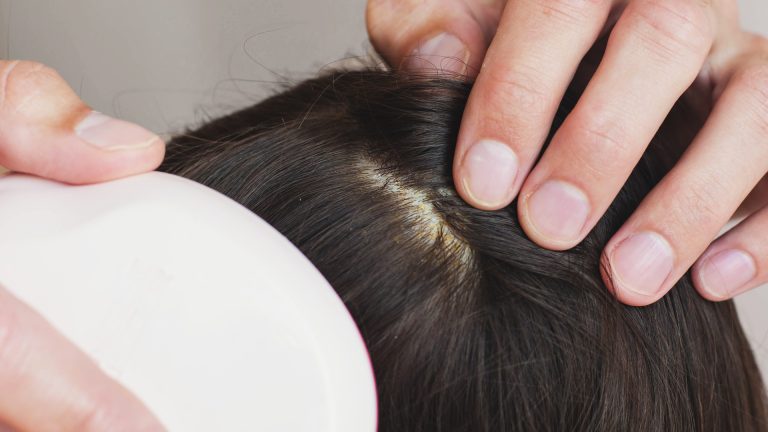
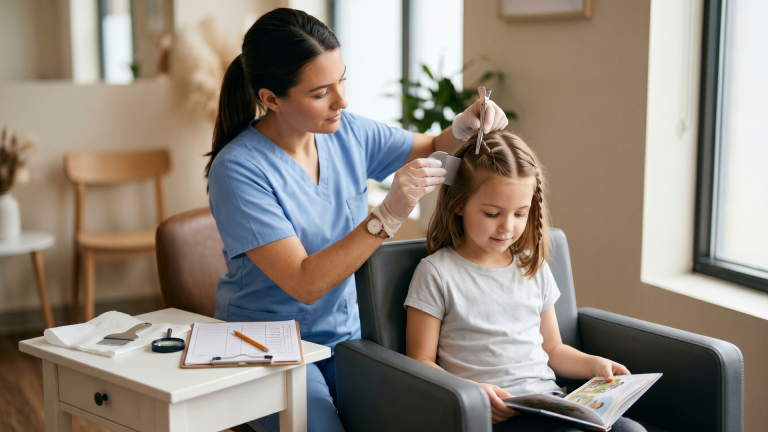
Finding a live nymph or adult louse is the best way to diagnose an infestation, the CDC says, but lice avoid light and move quickly. The AAP suggests seating your child in a brightly lit room and parting the hair to search one section at a time, paying attention to the hairline at the back of the neck and the area behind the ears. Specks can fool you as well. The AAP’s test is simple: nits are firmly attached to hair, while dandruff, dirt and similar particles are not. If you are still unsure, confirm it’s actually lice before buying shampoo or see your healthcare provider.
Age comes next. The CDC advises consulting a healthcare provider before treating young children, and the AAP asks parents to check with the child’s doctor before beginning any head lice treatment. If your child is very young, read about lice shampoo for toddlers under two before you open a box.
Once you and your child’s doctor have settled on a medicine, the CDC and AAP add a few cautions worth reading before you start:
- Do not use conditioner or a combination shampoo/conditioner before applying lice medicine.
- Follow the box or label exactly as written. Hair that reaches the shoulders or beyond might need a second bottle.
- An adult should apply the medicine, and a child should never be left alone with it in their hair.
- Keep lice medications out of the eyes, and flush right away if any gets in.
- Do not use extra medicine, or two different lice drugs at once, unless your doctor or pharmacist tells you to.
The CDC notes that some medications may cause itching or a mild burning sensation. If you are trying to tell that apart from the itch of lice themselves, our guide on why a lice shampoo reaction is easy to mistake for itch can help, and your child’s doctor should hear about anything that worries you.
When Is a Second Lice Treatment Needed?
A second treatment depends on whether the first medicine kills eggs. For a medication that kills lice but not eggs, the CDC’s treatment guidance says to treat again about a week after the first treatment, at 7 to 9 days depending on the drug. For one that kills both lice and eggs, it says retreatment may not be necessary.
The timing comes from the louse life cycle. The CDC says nits take about a week to hatch, with a range of 6 to 9 days, while the AAP gives 7 to 12 days depending on the surrounding temperature. A newly hatched nymph then needs time to mature, about seven days by the CDC’s estimate and 9 to 12 days by the AAP’s. The CDC sums up the target in one line: “Treat again after all eggs (nits) have hatched but before new eggs are produced.”
On a calendar, that can look like this: a first treatment on the 1st of the month with a 7-to-9-day repeat lands between the 8th and the 10th. Other medicines run a little later, since the CDC’s repeat timing reaches as far as 9 to 10 days after the first treatment. Your product label and your child’s doctor set the exact day.
Not every medicine follows that pattern. The AAP describes one that does not kill lice eggs but prevents newly hatched lice from living, with only 1 application needed. If you are using a medicine that kills both lice and eggs and still think another round is needed, the CDC says to talk to a healthcare provider before re-treating.
Why Are There Still Nits After Treatment?
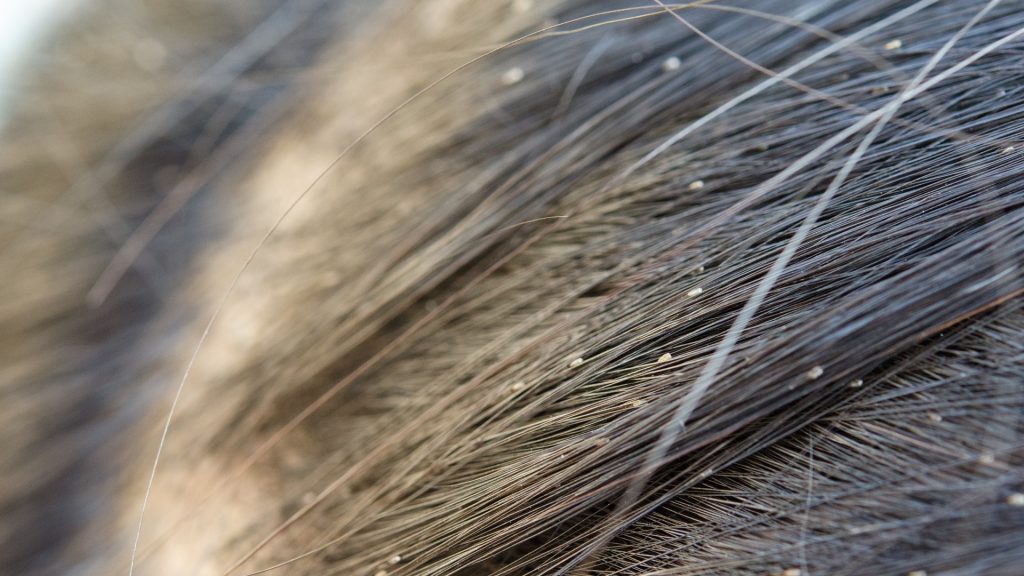
Nits left in the hair do not, by themselves, mean the treatment failed. The CDC says nits may stay in hair after treatment and that successful treatment will kill crawling lice. The AAP adds that empty nits stay on the hair shaft after the eggs hatch, so what you are looking at may be a shell with nothing inside.
Distance from the scalp is a useful clue. The CDC says nits attached more than 1/4 inch from the base of the hair shaft “are almost always hatched or dead,” and the AAP says eggs “are usually found within 4 to 6 mm of the scalp and do not survive if they are farther away.” If you find no crawling lice and the only nits are more than 1/4 inch out, the CDC says the infestation “is probably old and does not need treatment.” For a closer look at the difference, see which lice eggs can hatch and which are harmless.
Combing helps you see what is happening. The CDC advises checking the hair and removing nits and lice every 2 to 3 days for 2 to 3 weeks after each treatment. The AAP’s comb-out starts with wet hair and a fine-tooth louse or nit comb, worked through small sections, with the comb wiped on a wet paper towel after each pass so you can examine the scalp, comb and towel. The AAP also cautions that this method “usually doesn’t work on its own to get rid of head lice,” so it supports a treatment rather than replacing one.
Itching can mislead you too. The AAP says itching from head lice can last for weeks, even after the lice are gone, so a scratchy scalp on its own does not prove the medicine missed anything.
What If You Still See Live Lice After Treatment?
Live, active lice after treatment are your cue to call your child’s doctor before using more medicine than the label calls for. Give the medicine a fair chance first: the CDC says that if a few lice are still moving slowly 8 to 12 hours after treatment, you do not need to reapply it, because it takes time to kill all the lice. The picture changes if you find no dead lice, or the lice seem as active as before, which the CDC says may mean the medicine is not working.
The CDC lists five reasons a lice treatment can fail:
- Misdiagnosis, when the problem was not active lice
- Recent use of conditioner or a combination shampoo/conditioner
- Not following the treatment instructions
- Head lice resisting the medication
- Reinfestation after a successful treatment
Resistance is real but uneven. The AAP says head lice “can be resistant to the active ingredients in over the counter (OTC) treatments in some communities,” and that the likelihood varies across the country. The CDC sets a limit on repeating what is not working: do not treat a person more than 2 to 3 times with the same medication if it isn’t successful, and consider an alternative if crawling lice remain after a full course of treatment and retreatment. The AAP asks parents to check with the child’s doctor before beginning a second or third medicine, and MedlinePlus notes that you can ask your health care provider for a prescription product if an over-the-counter treatment does not work.
The CDC also advises checking all household members and close contacts, and treating every infested person at the same time. Reinfestation does not call for a deep clean, though. Nits kept away from scalp temperature “cannot hatch and usually die within a week,” the CDC says, and spending much time and money on housecleaning is not necessary.
The CDC’s short list is practical: machine wash and dry clothing, bedding and towels used in the two days before treatment, using 130 degrees Fahrenheit water and high heat. Seal anything you can’t wash or dry clean in a plastic bag for two weeks, and soak combs and brushes in water of at least 130 degrees Fahrenheit for 5 to 10 minutes. Skip fumigant sprays and fogs, which the CDC says can be toxic if inhaled or absorbed through the skin.
Frequently Asked Questions
Are nits and lice eggs the same thing?
Yes, nits are lice eggs, and the CDC uses the two words interchangeably. The word also covers what remains after hatching, since the AAP refers to empty nits on the hair shaft. A shampoo that does not kill eggs leaves the unhatched ones alive, while an empty casing has nothing left to kill.
Does permethrin kill lice eggs?
No, the CDC describes permethrin as a medicine for live lice, and unhatched eggs fall outside what it kills. The CDC also reports that lice have developed some resistance to 1% permethrin, though how widespread that resistance is remains unknown. If you used it and still see active lice, ask your child’s doctor about a next step.
What does a pediculicide shampoo kill?
A pediculicide kills live lice, and that is all the word promises. Killing eggs is a separate property that the CDC calls ovicidal. Malathion, for example, is described as pediculicidal and partially ovicidal, meaning it kills live lice and some eggs. When a label mentions only lice, check the active ingredient before assuming the eggs are covered.
What is the active ingredient in lice shampoo?
The active ingredient varies by product, so the label is the place to look. The CDC says each FDA-approved over-the-counter head lice product contains one active ingredient from its published list, and its guidance covers pyrethrins with piperonyl butoxide and 1% permethrin among others. If the name printed on your box is unfamiliar, a pharmacist can explain what it does.
Does regular shampoo kill lice or their eggs?
Regular shampoo is not among the lice treatments the CDC or the AAP recommends. The AAP’s guidance is direct: “The most effective way to treat head lice is with head lice medicine.” It also says lice can attach to anyone’s hair, and that it doesn’t matter if the hair is clean or dirty, so an extra wash is not a plan for lice or eggs.
Do all lice treatments kill eggs?
No, the CDC separates medicines that kill lice and eggs from those that kill lice alone. Prescription options widen the choice: the AAP says several suggest only 1 application, some don’t call for nit combing, and several are safe to use on children as young as 6 months. Your pediatrician can help you choose an appropriate option for your child.
How does lice shampoo work?
Lice shampoo works as an insecticide, which is how the CDC classifies the drugs used to treat lice. It calls lice medications “generally safe and effective when used correctly” and warns they “can be dangerous if misused or overused.” The AAP adds that over-the-counter treatments “sometimes are not the most effective,” so keep watching for live lice afterward.
Get Help From a Lice Lifters Clinic
If you would rather not sort through active ingredients and retreatment calendars, our clinics offer another route. Lice Lifters provides one-visit, in-clinic treatment with our non-toxic, enzyme-based solution, which is safe for children. It comes with our 30 Day Guarantee, which applies when the whole family is checked. When you’re ready, find a Lice Lifters clinic near you. For any health concern, your child’s doctor remains the right first call.